
Europe’s Mobility Transition Needs More Than One Solution -A Münzer Bioindustrie Perspective :
Pre-Conference Remarks by Walter Sattlberger -Vice-Director Corporate Communications & Public Relations (Münzer Bioindustrie)
Summary
Electric or biofuels? This article shows why technological diversity could be the key to a successful energy transition in Europe.
Europe’s Mobility Transition Needs More Than One Solution -A Münzer Bioindustrie Perspective
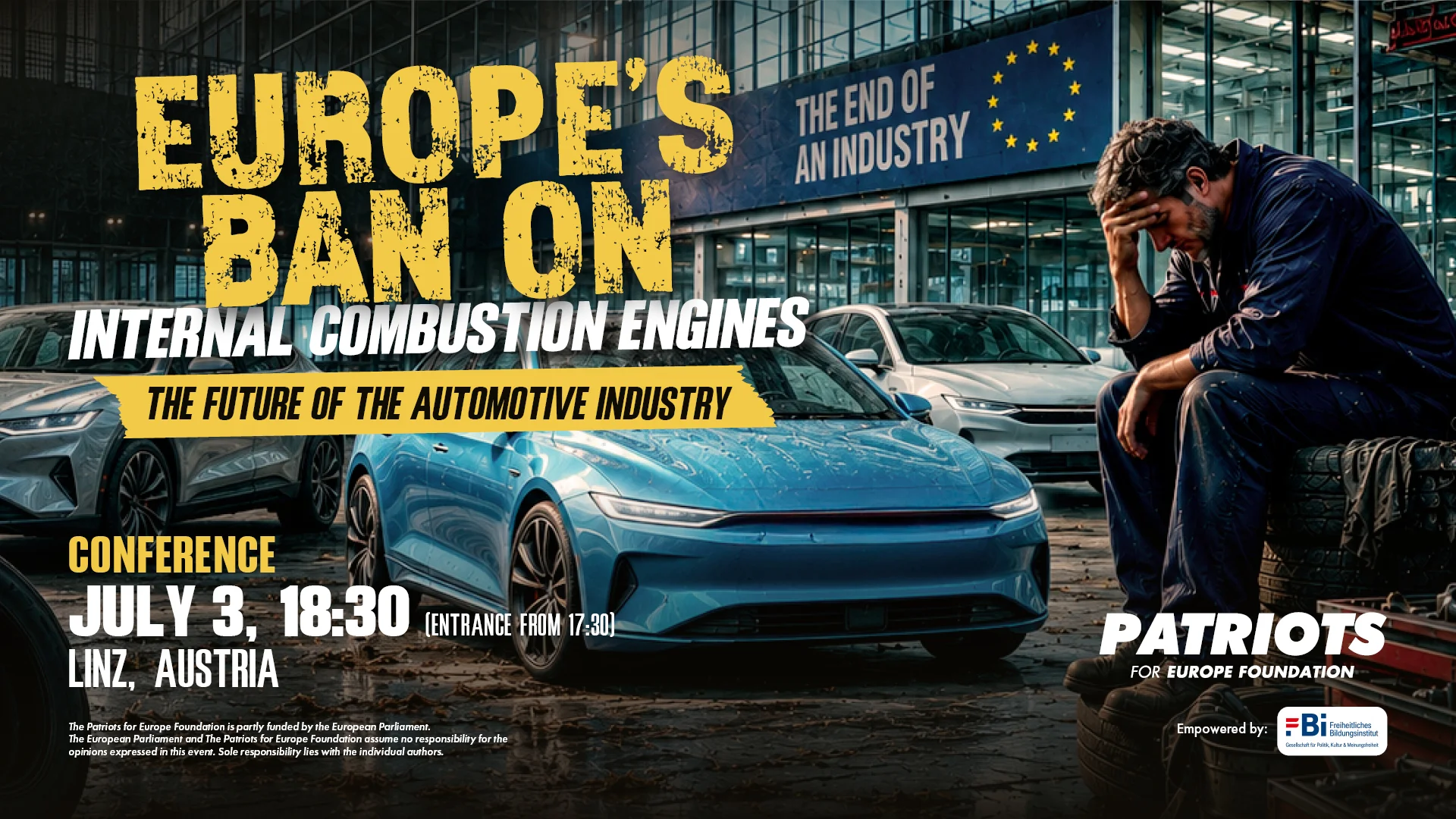
The European Union’s decision to phase out the sale of new internal combustion engine vehicles by 2035 marks a historic turning point for the automotive industry. While the objective of reducing greenhouse gas emissions is fully supported, Münzer Bioindustrie believes that Europe’s path to climate neutrality should remain technology-neutral and focus on measurable CO₂ reductions rather than a single technological solution.
From Münzer Bioindustrie’s perspective, the path to decarbonization should remain technology-neutral. However, in line with the principle: complement, don't replace. Electrification will play an important role in the future of mobility. However, sustainable biofuels and biodiesel already provide an effective and immediately available means of reducing emissions, particularly in sectors where electrification remains technically or economically challenging. Renewable fuels can contribute to climate goals today by utilizing existing vehicles, infrastructure, and industrial capabilities.
Europe’s automotive industry has been built on more than a century of expertise in combustion engine technology and supports millions of jobs. At the same time, the transition to battery-electric mobility creates new dependencies on imported batteries and critical raw materials, many of which are sourced or processed outside Europe. Reducing reliance on fossil fuels is essential, but replacing one strategic dependency with another should not be the goal of European industrial policy.
Recent geopolitical crises have highlighted the importance of energy security. Europe’s dependence on imported fossil fuels exposes economies to supply disruptions, volatile prices, and geopolitical risks. Much of Europe’s oil supply passes through strategic chokepoints such as the Strait of Hormuz, making energy markets vulnerable to conflicts far beyond European borders.
Sustainable biofuels offer a different model. Münzer Bioindustrie transforms used cooking oil and other waste-based feedstocks into renewable fuels, creating a regional and circular energy system. In practical terms, our biodiesel does not have to pass through the Strait of Hormuz—it comes from the Ölhafen Lobau in Vienna. This demonstrates how climate protection and energy security can go hand in hand. By converting locally available waste streams into renewable energy, Europe can reduce emissions, strengthen supply resilience, support domestic industry, and decrease dependence on imported fossil resources.
The debate about the future of mobility should therefore not be limited to electric versus combustion engines. The central question is how Europe can achieve the greatest CO₂ reductions while maintaining industrial competitiveness, energy sovereignty, and secure supply chains. A balanced strategy that combines electrification, renewable fuels, and circular economy solutions will deliver the strongest environmental, economic, and strategic benefits. For Münzer Bioindustrie, technological diversity is not an obstacle to decarbonization—it is a prerequisite for a successful European energy transition.
Walter Sattlberger -Vice-Director Corporate Communications & Public Relations (Münzer Bioindustrie).