
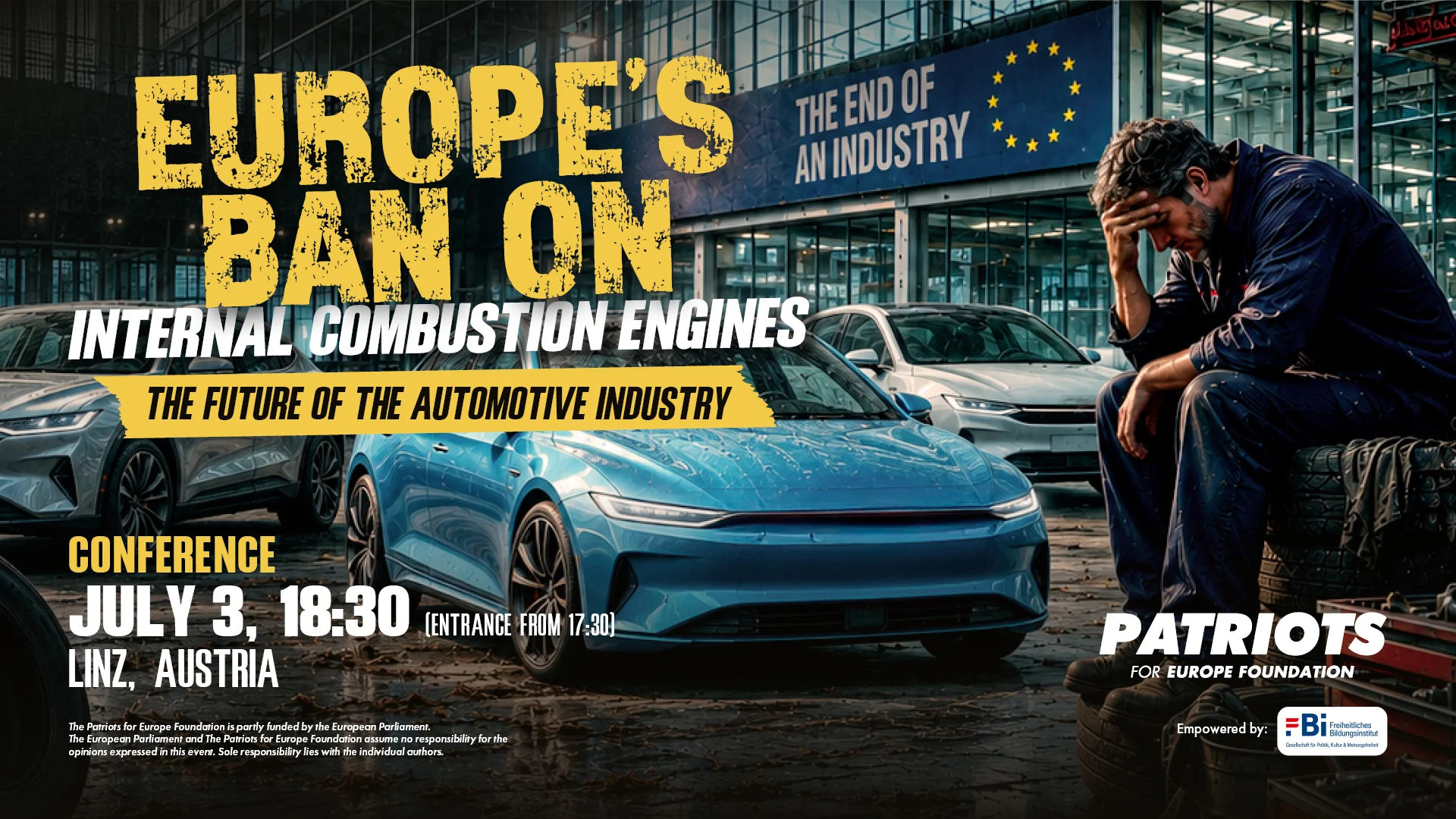
Europe’s Ban on Internal Combustion Engines and the Future of the Automotive Industry :
Pre-Conference Remarks by Günther Steinkellner, Regional Councillor of the state of Upper Austria
Summary
The ban on internal combustion engines in Europe by 2035 raises issues that go far beyond mobility alone. Employment, industrial competitiveness, technological sovereignty, and the continent’s economic future are at the heart of the debate. What challenges and opportunities does this historic transition present for the European automotive industry? Discover the key issues in this article.
Europe’s Ban on Internal Combustion Engines and the Future of the Automotive Industry
The European Union’s planned phase-out of new internal combustion engine vehicles by 2035 represents one of the most consequential industrial and mobility policy decisions of recent decades. Few initiatives have sparked such an extensive debate about Europe’s economic future, industrial competitiveness, and technological direction. As the automotive sector undergoes a profound transformation, policymakers, industry leaders, and experts continue to assess the opportunities and challenges that lie ahead.
The automotive industry remains one of Europe’s most important economic pillars. Millions of jobs depend directly or indirectly on vehicle manufacturers, suppliers, engineering firms, research centers, and a wide range of related services. For decades, the sector has been a driving force behind innovation, technological excellence, and industrial value creation. Today, however, it faces one of the most significant transitions in its history.
The planned move away from internal combustion engines requires manufacturers and suppliers to fundamentally adapt production processes, supply chains, and investment strategies. Across Europe, companies are investing billions of euros in new technologies, production facilities, and research initiatives. At the same time, important questions remain regarding the long-term economic implications of this transition and its impact on Europe’s industrial strength.
Particular attention is being paid to Europe’s position in an increasingly competitive global market. While European companies are undertaking substantial investments to meet new regulatory requirements, other economic regions are pursuing their own industrial strategies and strengthening their positions in emerging technologies. At the same time, concerns have been raised about growing dependence on critical raw materials, battery technologies, and international supply chains. Ensuring technological sovereignty and supply security has therefore become a strategic priority for both policymakers and industry stakeholders.
Another key aspect of the debate is the question of technological neutrality. Many experts argue that innovation should not be limited to a single technological pathway. In addition to battery-electric vehicles, alternative solutions such as hydrogen technologies and synthetic fuels are increasingly being discussed as potential components of a future mobility ecosystem. Supporters of a technology-neutral approach believe that maintaining flexibility can foster innovation while preserving industrial competitiveness.
What is certain is that the coming years will be decisive for the future of Europe’s automotive industry. Successfully managing this transformation will require stable regulatory frameworks, continued investment in research and development, and close cooperation between governments, industry, and academia.
Ultimately, the discussion surrounding the ban on internal combustion engines extends far beyond the future of a specific powertrain technology. It raises fundamental questions about Europe’s industrial future, economic resilience, employment, and global competitiveness. The manner in which this transition is managed will play a defining role in shaping the position of the European automotive industry for decades to come.
The deindustrialisation of Europe will make our World neither cleaner, nor more social, nor more peaceful. It will simply make Europe poorer.
Günther Steinkellner - Regional Councillor of the state of Upper Austria